


A pilot, a radiologist, and a truck driver walk into a bar. The bartender says: “Hey, aren’t you three supposed to be unemployed by now?”
The pilot shrugs. “My plane flies itself 90% of the time. I just got a 40% raise.”
The radiologist agrees: “AI reads scans much better than I do. I’ve never had more job offers.”
The truck driver orders a beer. “They’ve been promising my replacement since 2016. Meanwhile there’s 80,000 truckers missing.”
The bartender looks confused. “So who did the robots replace?”
A software developer in the corner quietly finishes his drink and leaves.

Jobs: It’s more complicated than we think
Pilots, radiologists, and truck drivers are arguably among the three most cited examples in the “automation will kill your job” narrative. The data tell a remarkably consistent (and consistently surprising!) story.
Pilots earn more than ever. The median US airline pilot salary went from $128,000 in 2016 to $227,000 in 2024, a 77% increase in eight years. Senior captains at major airlines make $400,000 - 500,000. All of this while modern aircraft fly themselves for the vast majority of any given flight. Boeing projects that 649,000 new pilots will be needed globally over the next 20 years.
Radiologists were famously declared obsolete in 2016 by Geoffrey Hinton, one of the so-called godfathers of deep learning, who said we should just “stop training radiologists now.” Almost a decade later, radiologists earn over $400,000 annually with a 38% salary increase over the past ten years. The US is heading toward a billion imaging studies a year, the job market is described as a “buyer’s market” for radiologists, and 30% of all radiologists were over 65 in 2023, meaning a wave of retirements is only just beginning.
Truck drivers were supposed to be completely replaced by autonomous vehicles. Instead, the US went from 2.25 million truck drivers in 2010 to over 3.5 million today, and there’s still a shortage of roughly 80,000, expected to keep growing. The technology that was supposed to kill the job (self-driving trucks) hasn’t arrived at scale, while a different technology (e-commerce) massively increased demand.
These three jobs had three different “this job is dead” predictions, but ultimately, all of those predictions were based on the same underlying technology: AI. But instead of getting wiped out by AI, what they’ve seen in reality is more demand, and higher wages.
And now it’s the software developers’ turn to panic
The angst is understandable. AI coding assistants are writing code for increasingly complex tasks, and shipping features at a pace that would have seemed absurd 6 months ago. Developers are watching models do in seconds what used to take them hours. It feels existential.
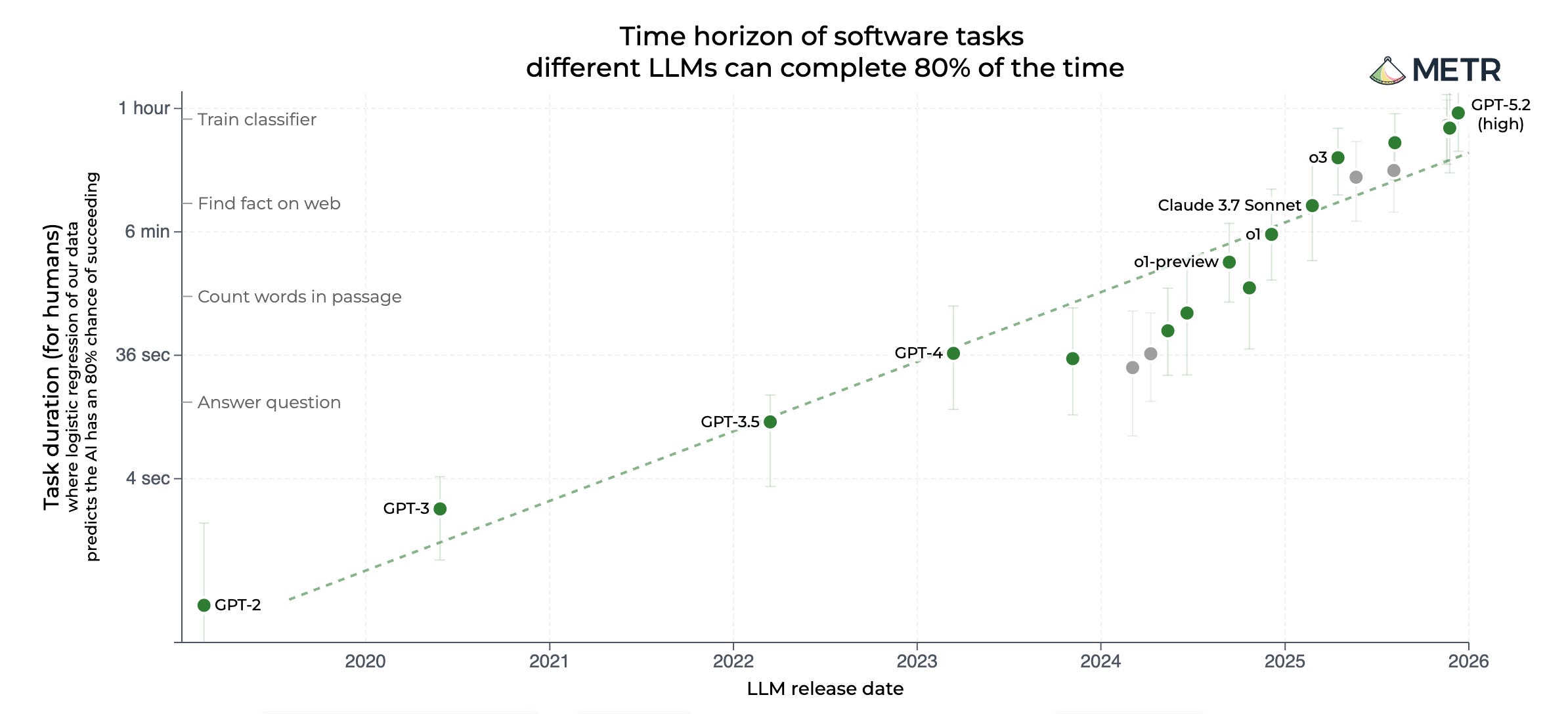
But look at the pattern. In each of the three cases above, the question was never really about whether a machine could actually do the task. Sometimes it could (autopilot, image recognition), sometimes it couldn’t, at least not yet (self-driving trucks). What mattered much more was the fact that technology tends to expand the overall volume of work rather than simply replacing the humans who do it.
Autopilot automated the core task and cockpit crews shrank, but the explosion in air travel driven by deregulation and cheap flights resulted in more pilots being needed than ever. Better image recognition made reading scans faster, but imaging volumes keep growing due to more people, more chronic disease, and an ever-lower threshold for ordering a scan. The case of truckers is particularly interesting. The technology hasn’t arrived yet, but another technological revolution, e-commerce, resulted in more packages moving, and more trucks on the road.
The main issue: the world is much more complicated than “when technology arrives, jobs will go”. This simplistic pattern fails time and time again. Yet, here we are, with AI being able to code increasingly well - and we fall straight into the trap of simplistic thinking. There may be so many different factors that will affect developer jobs, but one of them is straightforward: If AI makes it 10x cheaper and faster to build software, the world won’t just build the same amount of software with fewer developers! Instead, it will build vastly more software. Every small business that couldn’t afford a custom app, every research lab that couldn’t justify a developer hire, every process that was “not worth automating” suddenly becomes viable.
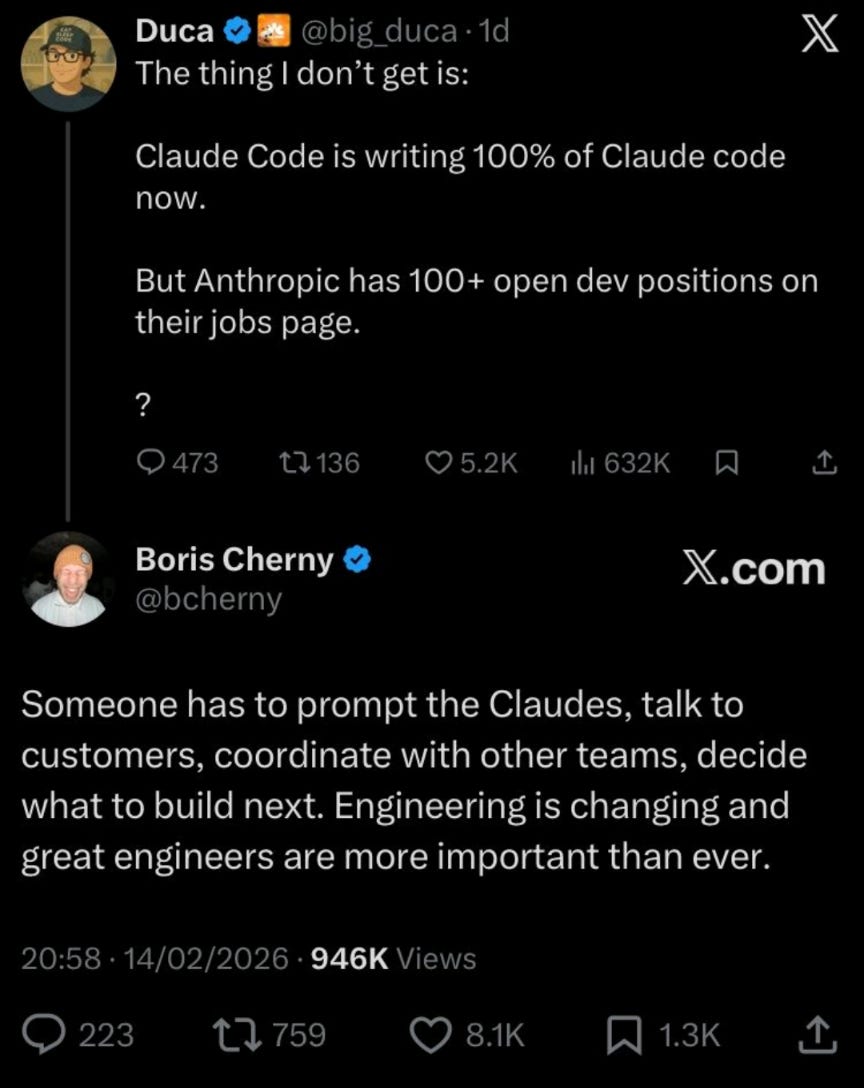
The developer at the bar is almost certainly right in thinking that his job will change. But the pilot’s job changed too. So did the radiologist’s and the truck driver’s. “Changed” is not the same as “gone”.
If history is any guide, the developers who are currently seemingly mass-producing their own “replacement” are actually mass-producing their own demand. How about that for a joke.
CODA
This is a newsletter with two subscription types. I highly recommend to switch to the paid version. While all content will remain free, all financial support directly funds EPFL AI Center-related activities.
To stay in touch, here are other ways to find me:
This is partly just Jevons paradox again, but for jobs!